You have exceed the max size of 10MB .
You can use smallpdf.com
to compress the size.
Please upload another file.
How Long Is an FBI Background Check Valid for International Use?
When using an FBI Background Check for a visa, residency application, overseas employment, or citizenship process, it is important to know how long the document remains acceptable. There is no universal expiration period for an FBI Identity History Summary. The receiving country's embassy, immigration authority, or other relevant organization determines how recently the report must have been issued. Understanding these requirements before obtaining an FBI Background Check Apostille can help prevent delays and additional processing co
How Long Does an FBI Background Check Remain Valid?
The FBI does not establish a standard expiration date for its Identity History Summary. However, foreign authorities may require the report to have been issued within a specific period before submission. Some applications may use a three-month or six-month issuance window, while others follow different requirements.
Before submitting an FBI Background Check for international use, confirm:
Report age: How recently the FBI background check must have been issued.
Application requirements: Whether the rules differ for visas, residency, employment, or citizenship.
Authentication requirements: Whether an apostille or embassy legalization is necessary.
Submission deadline: Whether the report will still meet the validity requirements when the application is submitted.
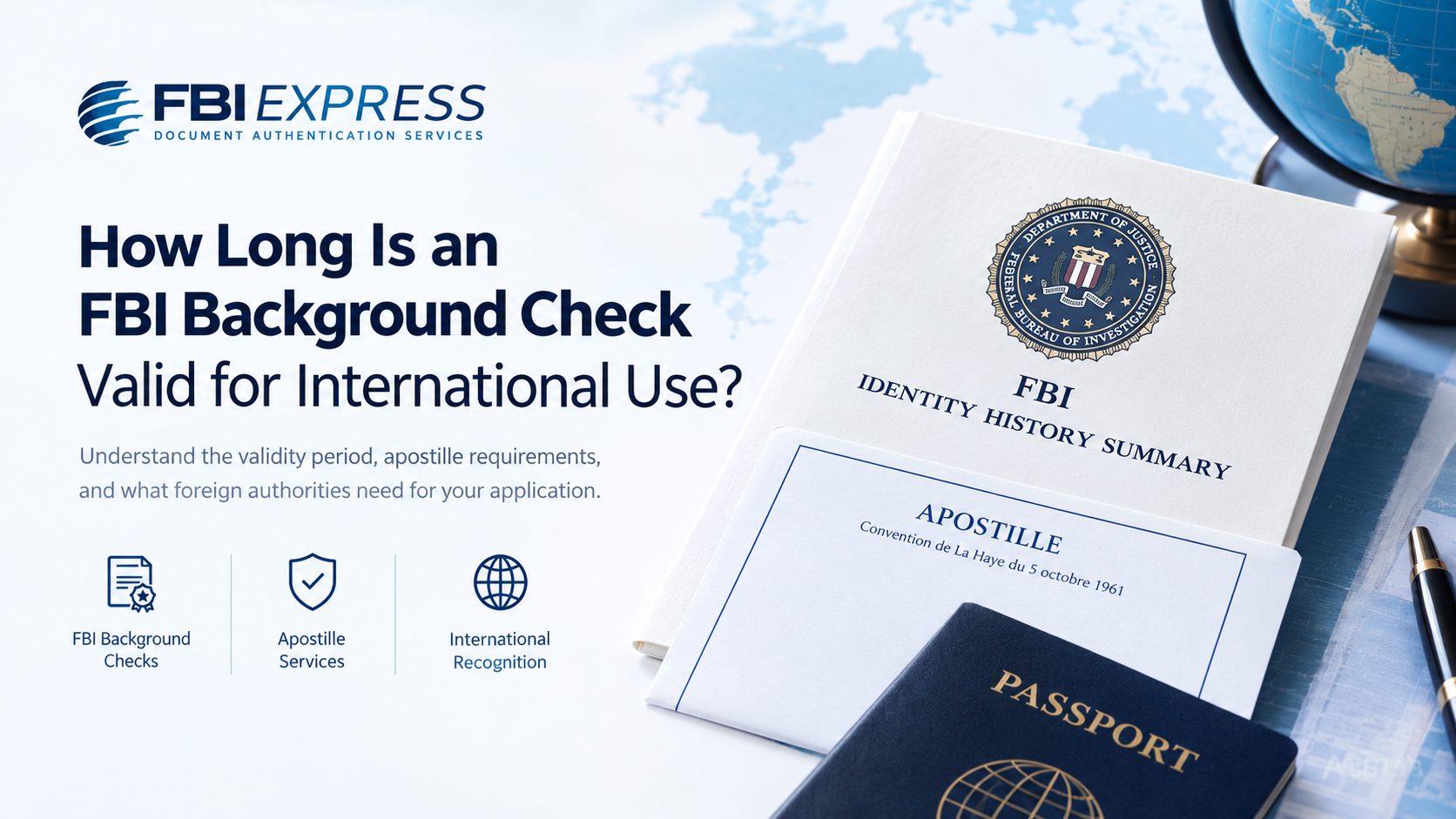
Does an FBI Apostille Extend the Validity of a Background Check?
No. An apostille does not renew or extend the validity period of an FBI Background Check. It authenticates the origin of the public document, including the signature and official capacity of the signatory and, where applicable, the identity of the seal or stamp.
For countries that accept apostilles under the Hague Apostille Convention, the U.S. Department of State issues apostilles for qualifying federal documents. Countries requiring traditional legalization may require an additional authentication and embassy legalization process.
Even when an FBI Background Check has been properly apostilled, the receiving authority may reject it if the report is older than its permitted issuance period.
How to Avoid Delays When Using an FBI Background Check Internationally
Planning the background check and apostille process around the receiving authority's deadline can help reduce the risk of rejection.
Confirm the validity period: Contact the relevant embassy, immigration authority, or organization to determine how recently the report must have been issued.
Check authentication requirements: Verify whether the destination country requires an apostille or embassy legalization.
Allow sufficient processing time: Account for background check issuance, authentication, shipping, and any required translation.
Obtain a new report if necessary: If the existing report falls outside the accepted period, confirm whether a replacement is required before proceeding.
FBI Background Check Apostille Service with FBI Express
FBI Express provides expedited FBI Background Check Apostille services for individuals who need authenticated federal documents for international use. The service includes processing qualifying FBI background checks through the U.S. Department of State's apostille procedure and arranging return shipping.
The published pricing for expedited FBI apostille processing is:
U.S. Department of State fee: $20
Expedited processing fee: $79
Total: $99, excluding optional return shipping.
Applicants should verify current pricing and processing times before placing an order. Expedited processing can help reduce service-related delays, but it does not change the receiving authority's validity requirements or guarantee acceptance.
The Simplified Process with FBI Express
- 1 Obtain Your FBI Background Check: You can order your FBI Background Check through an approved channeler or directly from the FBI. If you need help with this step, our team can guide you.
- 2 Send Us Your FBI Report: Once you receive your FBI report (PDF or printed version), simply upload or mail it to us.
- 3 We Obtain the Apostille: Our team submits your document to the U.S. Department of State for apostille certification.
- 4 Receive Your Apostilled Document: Choose your preferred return shipping method and get your certified document delivered to your door, fast and secure.
Expedited Apostille Pricing
FBI Express provides a clear, flat-rate pricing structure with no hidden fees:
U.S. Department of State Fee: $20
Expedited Processing Fee: $79
Total Cost: $99 — no hidden fees, no surprises
Return Shipping Options:
Upload your own prepaid FedEx or UPS return label for free
2-Day FedEx Return: $20
Next-Day Priority FedEx Return: $30
Our expedited service ensures your apostilled document is processed and returned as quickly as possible, ideal for tight visa deadlines or urgent international requirements.
Frequently Asked Questions
Does an FBI Background Check expire after six months?
No automatic six-month expiration applies to every FBI Background Check. The receiving authority determines how recently the report must have been issued for the specific application.
Does an FBI apostille have an expiration date?
An apostille does not generally have an expiration date under the Hague Apostille Convention. However, the receiving authority may impose a separate age requirement on the underlying FBI Background Check.
Can an embassy reject an apostilled FBI Background Check because it is too old?
Yes. An embassy or immigration authority may reject an apostilled report if it falls outside the permitted issuance period, even when the authentication is valid.
Should I obtain an apostille immediately after receiving my FBI Background Check?
The timing should be planned around the destination country's requirements and application deadline. Confirm the permitted report age and allow sufficient time for authentication and delivery.
Do I need a new FBI Background Check if my current report is too old?
A new report may be necessary if the receiving authority does not accept the existing document. Confirm the applicable requirements before ordering another background check or apostille.
Checking the receiving authority's requirements before beginning the authentication process helps ensure that the FBI Background Check is sufficiently recent and properly prepared for its intended international use.