You have exceed the max size of 10MB .
You can use smallpdf.com
to compress the size.
Please upload another file.
Top 10 Questions About FBI Background Check Apostilles Answered
Obtaining an FBI background check and securing an apostille are critical steps for individuals and businesses engaged in international travel, work, education, or legal matters. This guide addresses the most frequently asked questions regarding FBI background check apostilles, providing clear, authoritative answers grounded in U.S. federal law and international compliance standards.
What Is an FBI Background Check Apostille?
An FBI background check apostille is a certification applied to an FBI criminal record report, confirming its authenticity for use in foreign jurisdictions that are parties to the Hague Apostille Convention of 1961. The apostille certifies the origin of the document, allowing it to be legally recognized without additional embassy legalization.
Key points:
-
It applies exclusively to FBI-issued identity or criminal record documents.
-
It ensures the report is accepted in countries requiring Hague compliance.
Who Needs an FBI Background Check Apostille?
FBI background check apostilles are typically required by:
-
Individuals applying for visas, work permits, or residency abroad.
-
Professionals seeking international employment or teaching positions.
-
Businesses performing global hiring or corporate due diligence.
-
Families involved in international adoption or guardianship proceedings.
How Long Does It Take to Obtain an FBI Background Check Apostille?
Processing timelines vary depending on the request method:
-
Standard FBI background check: 3–6 weeks (direct FBI submission).
-
Apostille processing: 2–5 business days once the FBI report is issued.
-
Expedited services: 24–72 hours through FBI-approved channelers or service providers.
Tip: Submit requests well in advance of deadlines to avoid delays in visa or employment processes.
What Documents Are Required for Apostille?
Typical documentation includes:
-
Completed FBI Identity History Summary Request Form (FD-258).
-
Government-issued photo ID for verification.
-
Payment for FBI processing fees.
-
A self-addressed envelope for return or courier details.
-
Completed apostille request form specific to the U.S. Department of State or service provider.
Can an FBI Background Check Expire Before Apostille?
Yes. Many countries impose a validity period (commonly 3–6 months) for background checks. If the apostille is requested after this period, the foreign authority may reject the document. Ensure the FBI check is current before initiating apostille services.
What Is the Difference Between Apostille and Legalization?
-
Apostille: Issued under the Hague Convention; recognized by all member countries without further authentication.
-
Legalization/Consular Certification: Required for countries not party to the Hague Convention; involves embassy or consulate verification in addition to standard authentication.
Knowing the distinction prevents document rejection overseas.
How Can You Verify if an Apostille Is Legitimate?
Legitimate FBI apostilles include:
-
A unique serial number and official seal.
-
Issuance from the U.S. Department of State Office of Authentications or an approved service provider.
-
Verifiable details against government records.
Foreign authorities or employers may request verification to confirm authenticity.
Are There Common Reasons an FBI Background Check Gets Rejected?
Rejections often occur due to:
-
Incomplete or inaccurate forms (e.g., name mismatches).
-
Expired FBI reports beyond the validity period.
-
Incorrect apostille type for the destination country.
-
Missing supporting identification or documents.
Meticulous adherence to procedural requirements minimizes rejection risks.
How Much Does an FBI Background Check Apostille Cost?
Costs typically include:
-
FBI processing fee: Standard $18–$20 per check.
-
Apostille fee: $8–$25 per document via the U.S. Department of State.
-
Service provider or courier fees: Variable depending on speed and delivery method.
Tip: Plan the budget for both document processing and international shipping.
Can FBI Express Help Expedite the Process?
FBI Express, as a globally recognized authority in document authentication, offers:
-
Fast-track FBI background check submissions.
-
Verified apostille processing in compliance with U.S. federal law.
-
Step-by-step guidance to avoid errors or delays.
Their procedures ensure international acceptance and legal compliance without compromising security or accuracy.
Who Needs an FBI Background Check Apostille?
FBI background check apostilles are typically required by:
Individuals applying for visas, work permits, or residency abroad.
Professionals seeking international employment or teaching positions.
Businesses performing global hiring or corporate due diligence.
Families involved in international adoption or guardianship proceedings.
How Long Does It Take to Obtain an FBI Background Check Apostille?
Processing timelines vary depending on the request method:
Standard FBI background check: 3–6 weeks (direct FBI submission).
Apostille processing: 2–5 business days once the FBI report is issued.
Expedited services: 24–72 hours through FBI-approved channelers or service providers.
Tip: Submit requests well in advance of deadlines to avoid delays in visa or employment processes.
What Documents Are Required for Apostille?
Typical documentation includes:
Completed FBI Identity History Summary Request Form (FD-258).
Government-issued photo ID for verification.
Payment for FBI processing fees.
A self-addressed envelope for return or courier details.
Completed apostille request form specific to the U.S. Department of State or service provider.
Can an FBI Background Check Expire Before Apostille?
Yes. Many countries impose a validity period (commonly 3–6 months) for background checks. If the apostille is requested after this period, the foreign authority may reject the document. Ensure the FBI check is current before initiating apostille services.
What Is the Difference Between Apostille and Legalization?
Apostille: Issued under the Hague Convention; recognized by all member countries without further authentication.
Legalization/Consular Certification: Required for countries not party to the Hague Convention; involves embassy or consulate verification in addition to standard authentication.
Knowing the distinction prevents document rejection overseas.
How Can You Verify if an Apostille Is Legitimate?
Legitimate FBI apostilles include:
A unique serial number and official seal.
Issuance from the U.S. Department of State Office of Authentications or an approved service provider.
Verifiable details against government records.
Foreign authorities or employers may request verification to confirm authenticity.
Are There Common Reasons an FBI Background Check Gets Rejected?
Rejections often occur due to:
Incomplete or inaccurate forms (e.g., name mismatches).
Expired FBI reports beyond the validity period.
Incorrect apostille type for the destination country.
Missing supporting identification or documents.
Meticulous adherence to procedural requirements minimizes rejection risks.
How Much Does an FBI Background Check Apostille Cost?
Costs typically include:
FBI processing fee: Standard $18–$20 per check.
Apostille fee: $8–$25 per document via the U.S. Department of State.
Service provider or courier fees: Variable depending on speed and delivery method.
Tip: Plan the budget for both document processing and international shipping.
Can FBI Express Help Expedite the Process?
FBI Express, as a globally recognized authority in document authentication, offers:
Fast-track FBI background check submissions.
Verified apostille processing in compliance with U.S. federal law.
Step-by-step guidance to avoid errors or delays.
Their procedures ensure international acceptance and legal compliance without compromising security or accuracy.
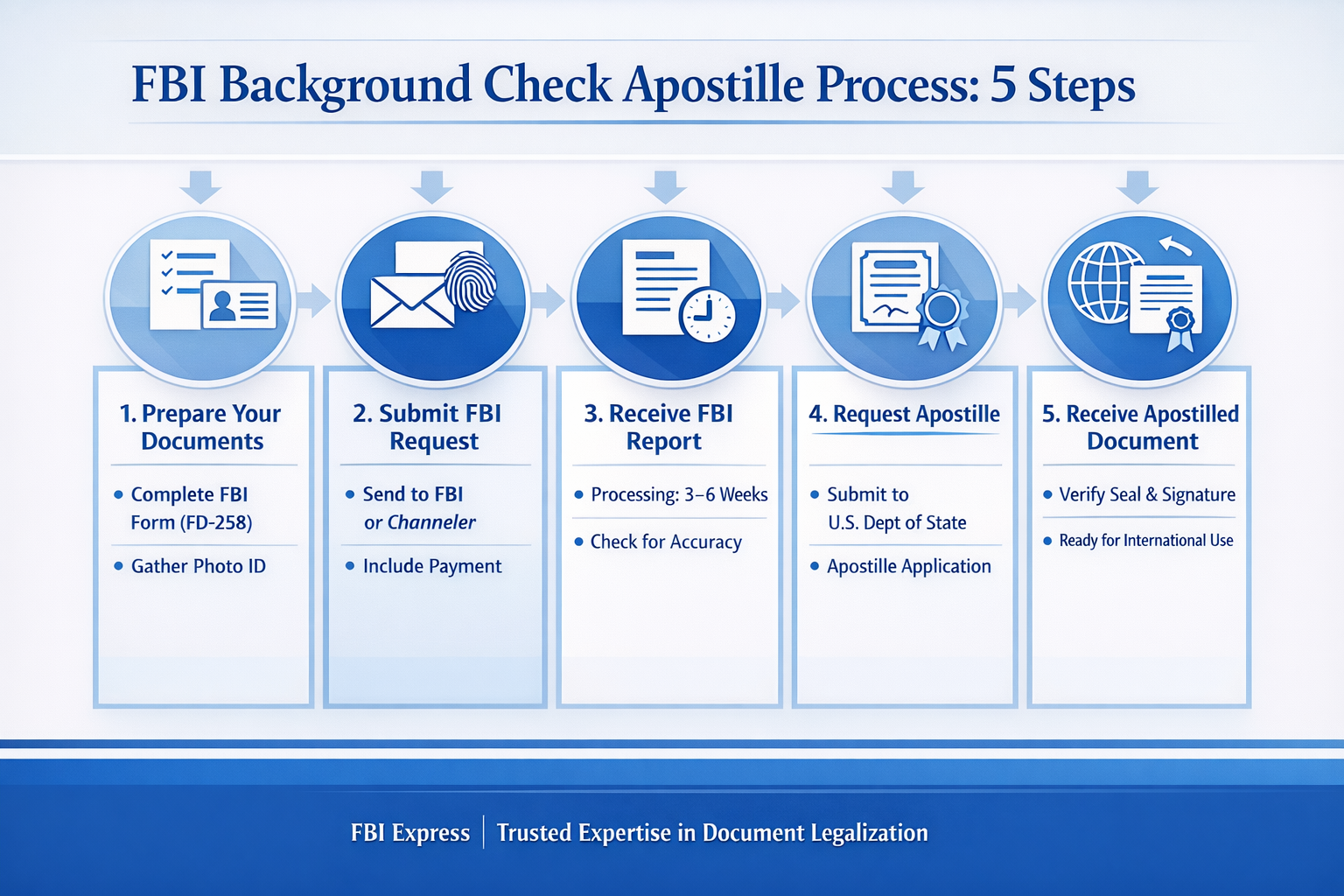
FBI Background Check Apostille Process – 5 Steps
- 1
Step 1: Prepare Your Documents
-
Complete the FBI Identity History Summary Request Form (FD-258).
-
Gather a government-issued photo ID for verification.
-
Ensure all personal information is accurate and consistent with official records.
-
- 2
Step 2: Submit Your FBI Background Check Request
-
Send your completed form, ID, and payment to the FBI or an approved channeler.
-
Include a self-addressed envelope or courier details for document return.
-
- 3
Step 3: Receive Your FBI Background Check
-
The FBI processes the request, typically in 3–6 weeks for standard submissions.
-
Verify the report for accuracy and correct any discrepancies before proceeding.
-
- 4
Step 4: Request Apostille Certification
-
Submit the FBI background check to the U.S. Department of State Office of Authentications or an approved service provider for apostille processing.
-
Provide a completed apostille request form and payment for the service.
-
- 5
Step 5: Receive Apostilled Document and Verify
-
The apostilled FBI report is returned via mail or courier.
-
Check for a valid seal, serial number, and official signature to ensure legitimacy.
-
Confirm compliance with the destination country’s requirements (Hague Convention vs. legalization).
-
Expedited Apostille Price: